


Kalonji Oil: Properties, Quality Standards and How to Source in Bulk from India
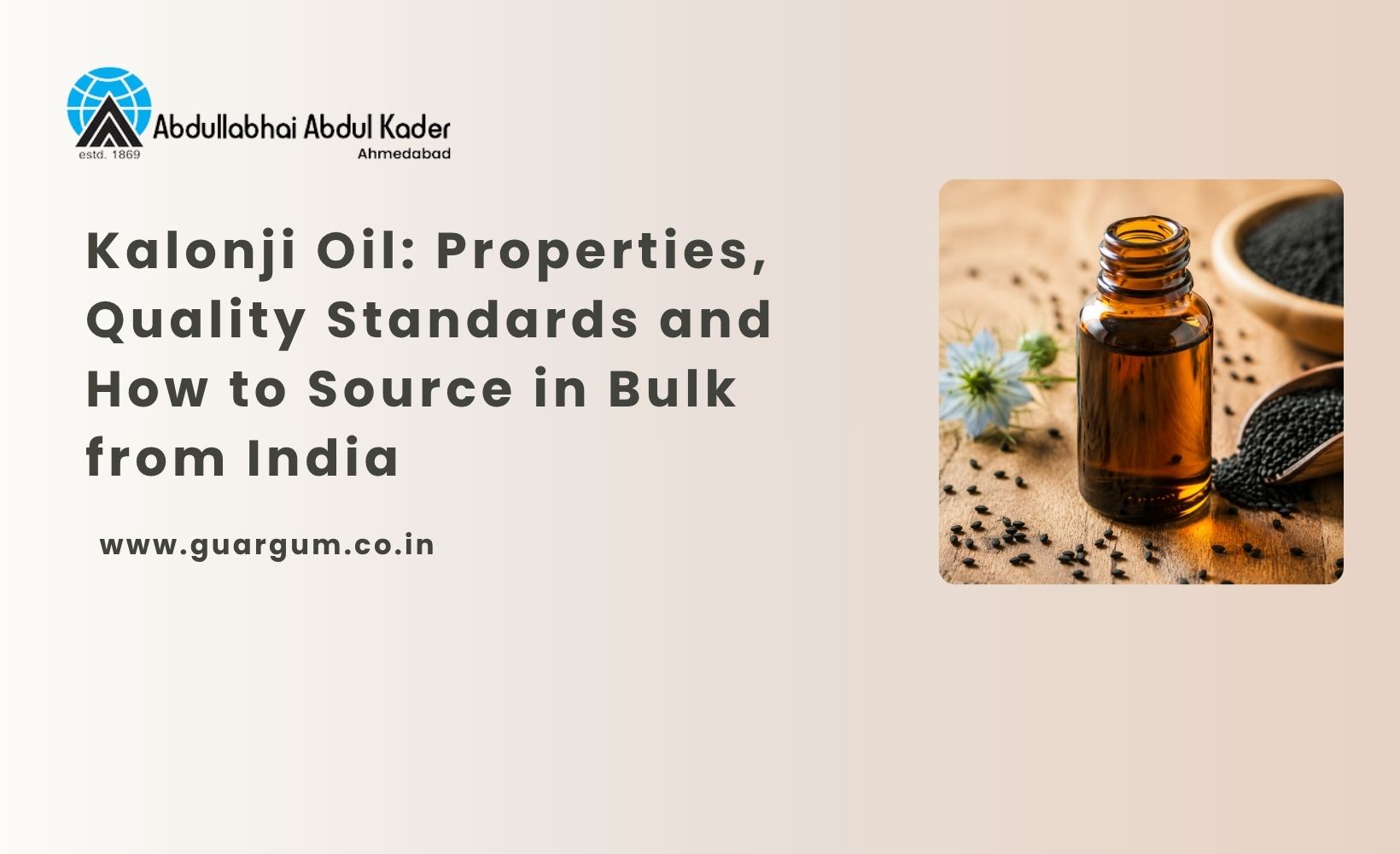
Kalonji oil is one of those ingredients that has quietly built a strong commercial following across multiple industries. Nutraceutical brands, cosmetic formulators, Ayurvedic manufacturers, and functional food producers across the Middle East, Europe, Southeast Asia, and North America are all procuring it in bulk. What is driving this demand is not just tradition but a clear understanding of what the oil contains, how it performs in formulations, and how its quality can be objectively verified before purchase.
If you are considering kalonji oil as a raw material for your next product range, this guide gives you the practical and technical information you need to make a confident sourcing decision.
Kalonji Oil: Understanding the Source and Its Significance
Kalonji oil is extracted from the seeds of Nigella sativa, a flowering plant native to Southwest Asia and parts of the Mediterranean. The seeds, popularly known as black seed or black cumin in different markets, contain between 35 and 40 percent oil by weight. This oil is extracted through cold pressing to preserve bioactive compounds, or through solvent extraction for industrial applications where thymoquinone preservation is a secondary concern.
India is one of the leading sources of kalonji oil globally. Seed cultivation is concentrated in Rajasthan, Gujarat, Madhya Pradesh, and Uttar Pradesh, where growing conditions produce seeds with a naturally high thymoquinone content. Proximity to port infrastructure in Ahmedabad and Mumbai supports efficient export logistics to markets worldwide.
 Call Now!
 Why Kalonji Oil Goes by Many Names in International Trade
Buyers sourcing this oil encounter it under several trade names, which can create confusion during procurement. The same oil is referred to as:
- Kalonji oil in Indian and South Asian markets
- Nigella sativa seed oil in European and pharmaceutical trade
- Black seed oil in Middle Eastern and Western supplement markets
- Habbatus Sauda oil in GCC countries and Islamic health product markets
- Black cumin oil in some North American and European health food markets
Understanding these naming conventions is important when writing product specifications, reviewing import documentation, or communicating with suppliers across different geographies. All names refer to the same botanical source and the same oil.
Kalonji Oil Properties: What Every Buyer Needs to Know
The commercial value of kalonji oil comes from its composition. Unlike generic carrier oils, kalonji oil contains a specific set of active compounds that make it a functional ingredient rather than just a base oil. Buyers evaluating it for formulation need to understand these properties in detail.
Thymoquinone Content and Why It Matters
Thymoquinone is the principal bioactive compound in kalonji oil and the reason it commands a premium over comparable vegetable oils. It is a naturally occurring phytochemical with documented anti-inflammatory, antioxidant, antimicrobial, and immunomodulatory properties. In a quality cold-pressed kalonji oil, thymoquinone content typically ranges from 0.5 to 1.5 percent of the volatile oil fraction.
For supplement manufacturers, thymoquinone percentage directly affects the potency positioning of the finished product. For cosmetic formulators, it determines the antioxidant and anti-inflammatory activity of the formulation. This figure must appear in the Certificate of Analysis, and buyers should request batch-specific data rather than a generic average.
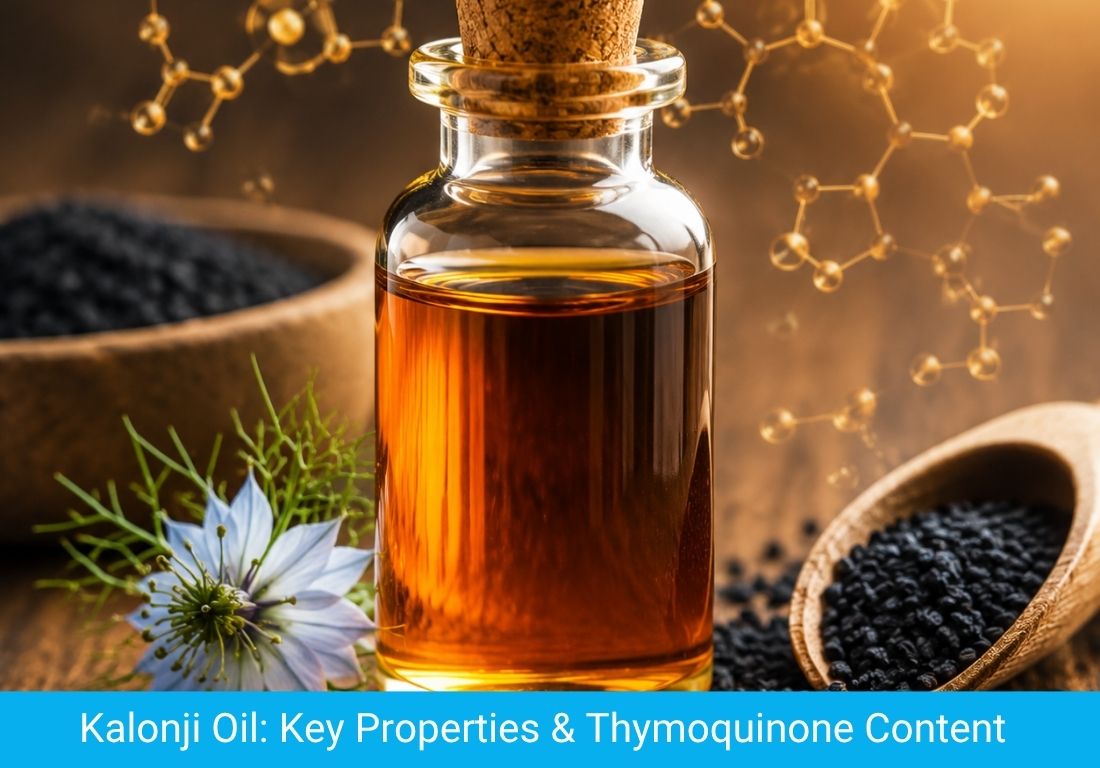
Fatty Acid Composition of Nigella Sativa Oil
The fatty acid profile of kalonji oil is what drives its performance across skin care and food applications:
- Linoleic acid (Omega-6): 50 to 60 percent, supporting skin barrier function and anti-inflammatory activity
- Oleic acid (Omega-9): 20 to 25 percent, providing emollient and moisturising properties
- Palmitic acid: approximately 12 percent, contributing stability to the formulation
- Alpha-linolenic acid (Omega-3): present in minor quantities, adding to the overall nutritional profile
- Thymol and carvacrol: volatile compounds contributing the characteristic pungent aroma and natural antimicrobial activity
Physical and Chemical Properties of Kalonji Oil
Standard physical characteristics that buyers and quality teams should reference:
- Colour: dark amber to brownish yellow in cold-pressed form; lighter in refined grade
- Odour: characteristic pungent and spicy aroma from thymoquinone and carvacrol
- Density: approximately 0.910 to 0.925 g/cm3
- Refractive index: 1.468 to 1.473 at 20 degrees Celsius
- Saponification value: 182 to 193 mg KOH/g
- Iodine value: 104 to 120 g/100g
- Free fatty acid content: less than 3 percent preferred for food and supplement grades
Our Other Product
Natural Food ColorsKalonji Oil Quality Standards: What Separates a Good Supplier from a Great One
The kalonji oil market has a wide quality range. Commodity-grade oil produced with minimal care and poor seed selection will look similar to a premium cold-pressed product in a photograph but perform very differently in a formulation. B2B buyers need to apply a structured quality evaluation before committing to a supplier.
Cold Pressed Kalonji Oil vs Solvent Extracted: The Core Distinction
Cold-pressed kalonji oil is extracted mechanically at temperatures below 60 degrees Celsius. This method preserves thymoquinone content, maintains the natural fatty acid structure, and produces an oil that meets the clean-label expectations of supplement and cosmetic buyers. Solvent-extracted oil uses hexane or similar agents, which can leave trace residues and degrades some bioactive compounds in the process.
For nutraceutical, pharmaceutical, and premium cosmetic applications, cold-pressed is the standard. Solvent-extracted oil has relevance in industrial applications where bioactivity is not the primary requirement.
Certifications Required for Kalonji Oil in Bulk Trade
Depending on your target market and application, the following certifications may be mandatory or commercially important:
- Halal certification: required for GCC, Southeast Asian, and most Middle Eastern markets
- Kosher certification: relevant for certain North American and European markets
- FSSAI compliance: required for food-grade kalonji oil sold or processed in India
- ISO certification of the manufacturing facility: indicator of process quality control
- MSDS and TDS: mandatory documentation for import and product safety compliance
- Third-party testing reports: independent lab verification of thymoquinone, fatty acid profile, and microbiological parameters
Certificate of Analysis: What It Must Contain
A complete Certificate of Analysis from a credible kalonji oil supplier should cover:
- Thymoquinone percentage measured by HPLC
- Free fatty acid value
- Peroxide value
- Moisture and volatile matter percentage
- Heavy metals: lead, arsenic, cadmium below permitted limits
- Microbiological parameters: total plate count, absence of Salmonella, E. coli, and Staphylococcus
- Colour and appearance
- Batch number and production date for traceability
A supplier who cannot provide a full COA on request, or who provides only a generic certificate without batch-specific data, is a significant procurement risk. Always request batch-specific documentation.
 Drop Us an Email!
 Applications of Kalonji Oil Across Industries
The versatility of nigella sativa oil is one of the key reasons bulk procurement demand has grown steadily. It serves as a functional ingredient in very different product categories, and the same oil often meets the specification needs of multiple buyer segments.
Kalonji Oil in Nutraceuticals and Dietary Supplements
The supplement sector is the largest buyer of kalonji oil in bulk globally. Applications include:
- Softgel capsules: kalonji oil filled directly into gelatin or vegetarian softgels
- Liquid drops and tinctures: blended with carrier oils for sub-lingual or oral use
- Combined formulations: paired with vitamin D, omega-3, or herbal extracts
- Immune support products: positioned on thymoquinone content and clinical backing
Kalonji Oil in Cosmetics and Personal Care
Cosmetic formulators value kalonji oil for its multifunctional profile:
- Anti-acne serums and face oils: thymoquinone contributes antimicrobial and anti-inflammatory activity
- Hair growth treatments and scalp oils: linoleic acid supports follicle health
- Moisturisers and body oils: the fatty acid profile provides emollient properties
- Lip care and healing balms: combined with beeswax and other naturals for dry skin relief
Kalonji Oil in Pharma and Herbal Formulations
Pharmaceutical and Ayurvedic manufacturers source kalonji oil for:
- Topical preparations targeting skin conditions
- Oral herbal formulations with respiratory and immune positioning
- Traditional medicine products for markets in South Asia and the Middle East
How to Source Kalonji Oil in Bulk from India: A Practical Guide
Sourcing kalonji oil in bulk from India is straightforward when you know what to look for and how to structure the procurement process. The following steps apply whether you are placing your first order or switching from an existing supplier.
Step 1: Define Your Specification Before Approaching Suppliers
Clarity on specification saves time and prevents mismatches. Define the following before reaching out:
- Grade required: cold-pressed or refined
- Minimum thymoquinone percentage
- Free fatty acid limit
- Certifications required: Halal, Kosher, FSSAI, or others
- Packaging format: drums, jerry cans, or IBC totes
- Minimum order quantity and target delivery location
Step 2: Request Samples and Verify Against Your Specification
A sample request is standard practice and any serious supplier will accommodate it. Send the received sample to an accredited third-party laboratory for independent verification of thymoquinone content, fatty acid profile, and microbiological parameters. Do not rely solely on the supplier-provided COA for the first order.
Step 3: Evaluate Supplier Credentials
Before placing a bulk order, verify:
- Export experience and references from buyers in similar markets
- Facility certifications and audit history
- Consistency of supply over time
- Responsiveness and technical support capability
- Ability to provide documentation required for your target market import
Step 4: Confirm Packaging, Lead Time, and Payment Terms
Kalonji oil is typically shipped in food-grade HDPE drums of 20 to 25 kilograms, or in larger IBC totes for high-volume buyers. Confirm lead time from order confirmation to dispatch, standard payment terms, and freight options to your port or warehouse.
About Abdullabhai Abdul Kader (Ahmedabad)
Abdullabhai Abdul Kader (Ahmedabad) is a manufacturer and exporter of premium agro-based specialty ingredients with decades of experience serving B2B buyers across more than 30 countries. Based in Ahmedabad, Gujarat, the company is well positioned to supply kalonji oil and nigella sativa seed oil to buyers in the nutraceutical, cosmetic, pharmaceutical, and food sectors.
What buyers consistently value about working with Abdullabhai Abdul Kader (Ahmedabad):
- Cold-pressed kalonji oil with verified thymoquinone content in every batch
- Full documentation provided as standard: Certificate of Analysis, MSDS, Halal certification
- Flexible order quantities to accommodate first-time buyers and large-scale distributors
- Packaging in food-grade drums and IBC totes with proper labelling for international shipment
- Export experience to Middle East, Europe, Southeast Asia, and North America
- Technical support team available to assist with specification matching and formulation queries
- Consistent quality across repeat orders with batch traceability
Abdullabhai Abdul Kader (Ahmedabad) supplies kalonji oil as both cold-pressed and refined grades to meet the specific needs of different buyer segments. Whether you are formulating a new supplement, building a private label product range, or scaling an existing manufacturing operation, the team at Abdullabhai Abdul Kader (Ahmedabad) is ready to support your sourcing requirements.
Kalonji Oil Sourcing from India: The Right Quality, the Right Partner
Kalonji oil is a high-performance ingredient that rewards buyers who take quality seriously. Thymoquinone content, extraction method, fatty acid profile, and certification compliance are not optional considerations. They are the parameters that determine whether your finished product performs as expected and whether your supply chain holds up across multiple order cycles.
India offers a strong combination of seed quality, processing capability, and export infrastructure that makes bulk sourcing of nigella sativa oil commercially practical. The right supplier will be transparent about their specifications, responsive on sample requests, and consistent on quality across batches.
Abdullabhai Abdul Kader (Ahmedabad) meets all of these criteria. Contact the team today to request a product sample, receive a detailed specification sheet, or discuss your bulk kalonji oil requirements. The first conversation is the fastest way to confirm whether the product and the partnership are the right fit for your business.

