


Black Seed Oil in the Middle East: Habbatus Sauda Market, Bulk Demand and Trade Routes
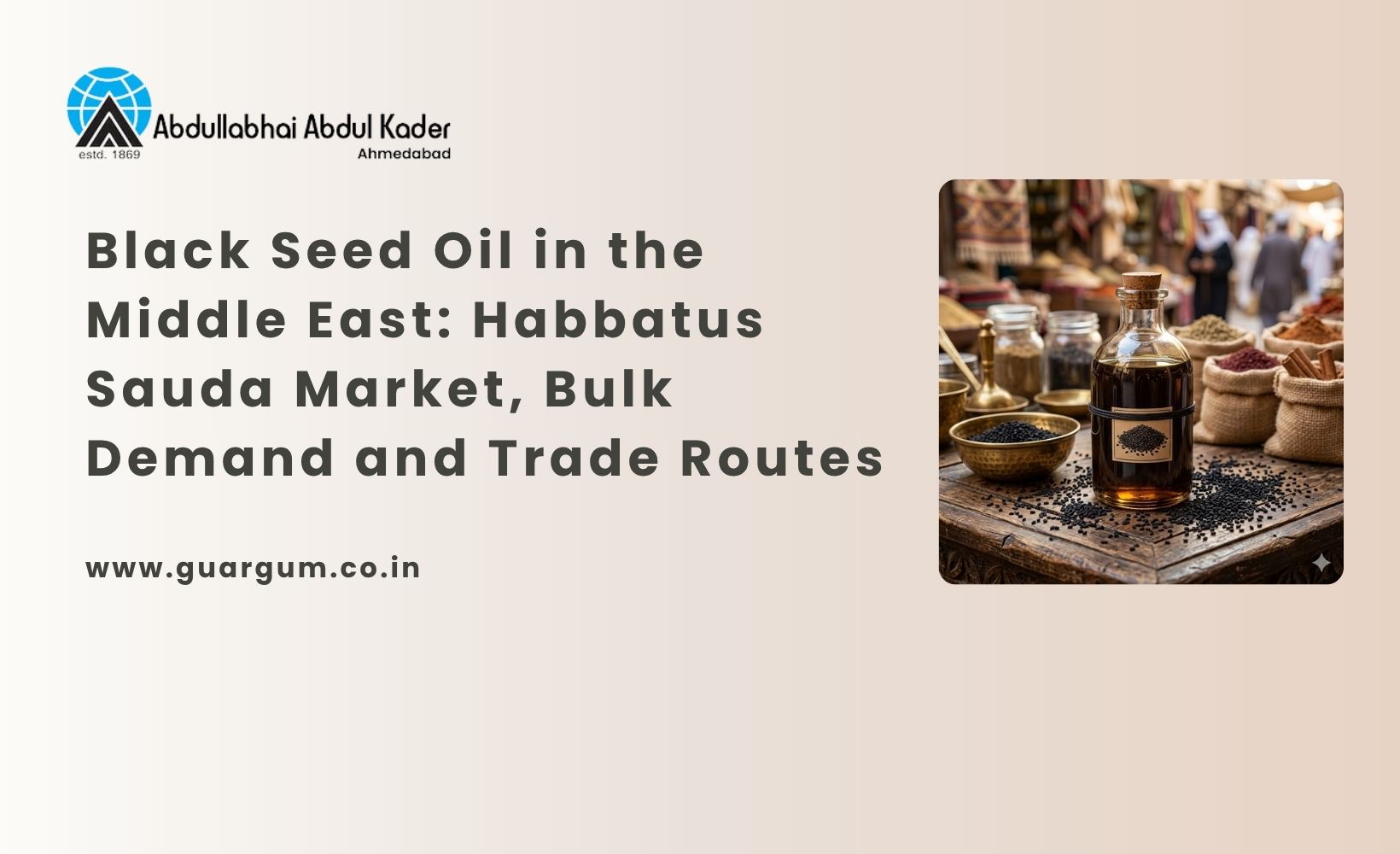
The Middle East is not just another export destination for black seed oil. It is the heartland of demand. Habbatus Sauda, the Arabic name for black seed, carries deep religious and cultural significance across GCC countries, the Levant, and North Africa. This cultural foundation has created a market where consumer demand is consistent, brand loyalty is strong, and the appetite for high-quality nigella sativa seed oil in bulk is growing every year.
For Indian exporters and B2B buyers operating in this region, understanding the specific dynamics of the Middle East black seed oil market is essential. This article covers the market context, buyer segments, quality requirements, key trade routes, and how to position your sourcing or export strategy effectively.
Habbatus Sauda Oil: Cultural and Religious Significance Driving Consistent Demand
The significance of black seed in the Middle East goes beyond wellness trends. Habbatus Sauda is referenced in Islamic tradition as a remedy for every illness except death, a reference that has been widely documented in religious texts and is actively cited in product marketing across the region. This creates a demand base that is not dependent on seasonal trends or marketing cycles.
Consumers across Saudi Arabia, UAE, Kuwait, Qatar, Bahrain, Oman, Egypt, and Jordan have grown up with black seed oil as a household staple. It is consumed as a dietary supplement, used in traditional medicine, incorporated into food preparations, and applied topically for skin and hair care. This multi-use pattern means a single bulk consignment of habbatus sauda oil serves several product categories simultaneously.
Habbatus Sauda Oil Demand Across GCC Markets
The six GCC countries, Saudi Arabia, UAE, Kuwait, Qatar, Bahrain, and Oman, together represent the most commercially significant block within the broader Middle East black seed oil market:
- Saudi Arabia is the largest single market in the region. Religious tourism through Mecca and Medina creates additional demand as pilgrims from around the world purchase habbatus sauda products as gifts and personal health items.
- UAE functions as a re-export hub. Products imported into Dubai are distributed onward to markets across the GCC, East Africa, and South Asia.
- Kuwait and Qatar have high per-capita health supplement spending and a sophisticated retail pharmacy sector that actively stocks premium habbatus sauda oil products.
- Bahrain and Oman are smaller volume markets but show consistent growth driven by health awareness and the availability of organised retail channels.
Read Our Article
Black Seed Oil: Ancient Remedy with Modern BenefitsBlack Seed Oil Market in the Broader Middle East and North Africa
Beyond the GCC, several other Middle Eastern and North African markets present strong opportunities for bulk black seed oil trade.
Egypt: Large Population, Growing Health Awareness
Egypt is one of the largest Arabic-speaking populations in the world and has a well-established tradition of using nigella sativa seeds and oil in cooking and traditional medicine. The organised supplement sector in Egypt is growing, and domestic manufacturers are increasingly looking to source quality kalonji oil in bulk from Indian suppliers to meet local production demand.
Jordan and the Levant Region
Jordan, Lebanon, and Syria have a long history of using black seed in culinary and medicinal contexts. Jordan in particular has an active pharmaceutical and nutraceutical manufacturing sector that sources bulk ingredients including habbatus sauda oil for finished product manufacturing. Jordanian buyers tend to require strong documentation and prefer suppliers with established export records.
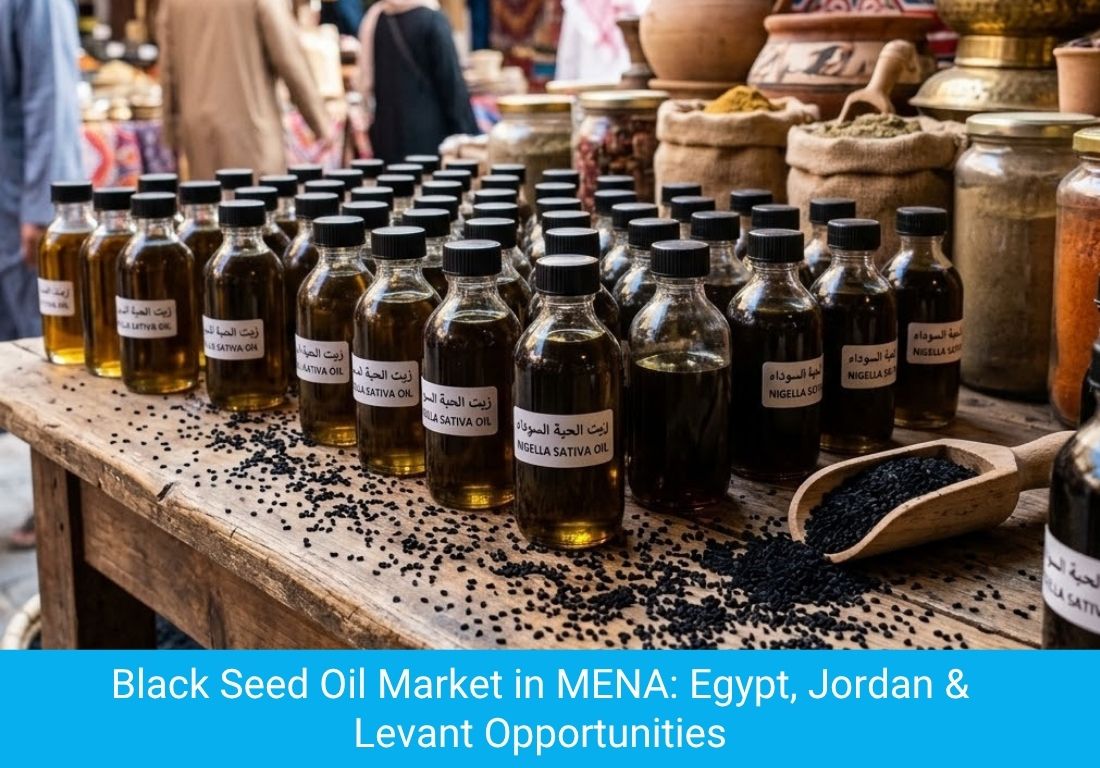
North Africa: Morocco, Algeria, Tunisia
The Maghreb countries have their own deep traditions around black seed use. These markets typically source through intermediary traders based in Europe or the UAE, but direct procurement from Indian manufacturers is growing as buyers become more cost-conscious and quality-focused. Halal certification is non-negotiable in this region.
Quality Requirements for Black Seed Oil in Middle East Markets
Middle Eastern buyers, whether they are distributors, pharma manufacturers, or private label brands, apply specific quality standards to their bulk procurement. Understanding these requirements is essential before entering this market as a supplier or before evaluating local partners as a buyer.
Halal Certification: A Non-Negotiable Requirement
Every batch of habbatus sauda oil entering the Middle East market must carry valid Halal certification from a recognised certifying body. This applies regardless of the end use, whether it is a dietary supplement, a cosmetic product, or a food ingredient. Buyers will not process import documentation without a Halal certificate, and retail or pharmacy buyers will not accept products without it on the label.
Additional Quality Parameters Middle Eastern Buyers Specify
Beyond Halal certification, procurement teams in the Middle East typically specify the following in their purchase orders and supplier agreements:
- Thymoquinone content: minimum 0.5 percent, with premium buyers specifying 1 percent or above for pharmaceutical and high-potency supplement applications
- Cold-pressed extraction: mandatory for most supplement and health food applications in this market
- Free fatty acid value: below 3 percent to ensure acceptable shelf life in warm climate conditions
- Peroxide value: low peroxide value is particularly important given the high ambient temperatures in GCC storage environments
- Microbiological compliance: total plate count, absence of Salmonella, E. coli, and other pathogens
- Heavy metals within permitted limits as per GCC Standardization Organization guidelines
- Packaging: food-grade HDPE drums or dark glass bottles to protect the oil from light degradation during transport and storage
- Country of origin documentation and phytosanitary certificate for customs clearance
 Email!
 Trade Routes for Black Seed Oil from India to the Middle East
India is a primary origin country for nigella sativa seed oil exported to the Middle East. The trade route is well established and supported by strong freight connectivity between Indian ports and GCC destinations.
Primary Shipping Routes
Most bulk shipments of kalonji oil from India to the Middle East move through the following logistics channels:
- Ahmedabad and Mundra Port to Jebel Ali (Dubai): the most common route, with frequent shipping services and transit times of approximately 5 to 8 days. Dubai then serves as the distribution hub for onward movement across the GCC.
- Mumbai (JNPT) to Dammam or Jeddah: preferred for direct shipments to Saudi Arabia, with transit times of 7 to 12 days depending on the shipping line.
- Mundra to Salalah (Oman) or Muscat: relevant for buyers in Oman and for transshipment to East Africa.
- Air freight from Ahmedabad or Mumbai: used for smaller high-value sample shipments or urgent orders where transit time is a priority.
Documentation Required for Export to Middle East
A standard export consignment of black seed oil to GCC markets requires:
- Commercial invoice and packing list
- Certificate of Origin issued by an authorised chamber of commerce
- Halal certificate from a recognised certifying body
- Certificate of Analysis for the specific batch
- Phytosanitary certificate from the relevant Indian authority
- MSDS and product TDS
- Food Safety Declaration where required by the importing country
Our Other Product
Castor OilBuyer Segments in the Middle East Black Seed Oil Market
Understanding who buys habbatus sauda oil in bulk in the Middle East helps both suppliers and buyers position their product and sourcing strategy correctly.
- Pharmaceutical and nutraceutical manufacturers: producing capsules, softgels, liquid supplements, and Unani medicines. These buyers require pharmaceutical-grade documentation and consistent batch quality.
- Retail supplement distributors: supplying supermarkets, pharmacies, and health food stores across the GCC. These buyers prioritise packaging presentation and labelling compliance alongside product quality.
- Cosmetic and personal care manufacturers: using kalonji oil in hair oils, creams, and skin care formulations targeting the regional preference for natural and Islamic beauty products.
- Food manufacturers and bakeries: incorporating black seed oil as a flavouring and functional ingredient in breads, confectionery, and traditional food products.
- Traders and re-exporters based in Dubai: importing in bulk from Indian suppliers and distributing to smaller buyers across the GCC, East Africa, and South Asia.
About Abdullabhai Abdul Kader (Ahmedabad)
Abdullabhai Abdul Kader (Ahmedabad) is a manufacturer and bulk exporter of nigella sativa seed oil and kalonji oil based in Ahmedabad, Gujarat, India. With extensive experience in supplying B2B buyers across the Middle East, the company understands the specific quality, certification, and documentation requirements of GCC and broader regional markets.
What Middle Eastern buyers value about working with Abdullabhai Abdul Kader (Ahmedabad):
- Halal-certified kalonji oil available in both cold-pressed and refined grades
- Consistent thymoquinone content verified through batch-specific Certificate of Analysis
- Full export documentation package including Halal certificate, COA, MSDS, Certificate of Origin, and phytosanitary certificate
- Flexible packaging in food-grade HDPE drums, suitable for Middle East storage and distribution conditions
- Established shipping connections through Mundra and Ahmedabad to Jebel Ali, Jeddah, and Dammam
- Competitive pricing on bulk orders with transparent lead times
- Dedicated export team with experience in GCC import regulations and documentation requirements
Abdullabhai Abdul Kader (Ahmedabad) currently supplies habbatus sauda oil to buyers in Saudi Arabia, UAE, Kuwait, Egypt, and Jordan. Buyers looking to establish or expand their black seed oil sourcing from India are welcome to contact the team for samples, specifications, and pricing.
Black Seed Oil Middle East Market Opportunity: The Right Time to Act
The Middle East black seed oil market combines cultural permanence with modern health trends. Habbatus Sauda has been part of regional life for centuries and that foundation is now being reinforced by growing consumer interest in natural supplements, clean-label cosmetics, and functional foods. Demand is not going to slow down.
For Indian exporters, the combination of strong seed availability, competitive processing costs, and established trade routes makes this one of the most accessible and rewarding export markets for kalonji oil. For Middle Eastern manufacturers and distributors, sourcing directly from an established Indian supplier removes intermediary costs and gives direct control over quality and specifications.
Abdullabhai Abdul Kader (Ahmedabad) is ready to be that direct supplier. Contact the team today to discuss your bulk requirements, request a Halal-certified sample, or get a pricing proposal for nigella sativa seed oil supply to your market.

