


Black Seed Oil Benefits: The Science Behind Nigella Sativa and How to Source It in Bulk

Black seed oil has moved well beyond traditional medicine shelves. Today it sits at the centre of formulation decisions for nutraceutical brands, cosmetic manufacturers, pharmaceutical companies, and functional food producers across the world. The reason is straightforward: the science behind its benefits is solid, the global demand is growing year on year, and high-quality bulk supply is available from India at competitive specifications.
If you are evaluating nigella sativa seed oil for your next product line, this guide is written for you. It covers the active compounds, the researched health benefits, how to assess oil quality, and what to look for when sourcing in bulk.
Nigella Sativa Seed Oil: What Makes It Scientifically Significant
Nigella sativa, widely known as kalonji or black cumin, produces a seed that is approximately 35 to 40 percent oil by weight. That oil contains a unique combination of active compounds that researchers have studied extensively over the past three decades. Understanding these compounds is essential before any formulation or sourcing decision.
Thymoquinone: The Primary Active Compound in Black Seed Oil
Thymoquinone accounts for between 27 and 57 percent of the volatile oil fraction in nigella sativa seed oil, depending on seed origin and extraction method. It is the compound responsible for most of the documented biological activity. Published research has linked thymoquinone to anti-inflammatory, antioxidant, antimicrobial, and immunomodulatory effects.
For B2B buyers, thymoquinone percentage is a primary quality indicator. A high-quality cold-pressed black seed oil should typically contain a thymoquinone concentration of 0.5 to 1.5 percent or higher, and this should be verifiable in the Certificate of Analysis.
 Call Us Now!
 Fatty Acid Profile of Nigella Sativa Seed Oil
Beyond thymoquinone, the fatty acid composition of kalonji oil makes it valuable across multiple applications:
- Linoleic acid (Omega-6) typically represents 50 to 60 percent of total fatty acids
- Oleic acid (Omega-9) represents approximately 20 to 25 percent
- Palmitic acid and stearic acid make up the remaining saturated fraction
- Thymol and carvacrol contribute to the characteristic pungent aroma and antimicrobial properties
This fatty acid profile makes nigella sativa seed oil suitable for skin care formulations, dietary supplements, and food-grade applications where a functional oil with demonstrated bioactivity is required.
Read Our Article
Black Seed Oil: Ancient Remedy with Modern BenefitsBlack Seed Oil Benefits Supported by Research
The black seed oil benefits catalogued in peer-reviewed literature span several health and wellness categories. For manufacturers building product claims, understanding the evidence base is as important as understanding the raw material.
Respiratory Health and Black Seed Oil
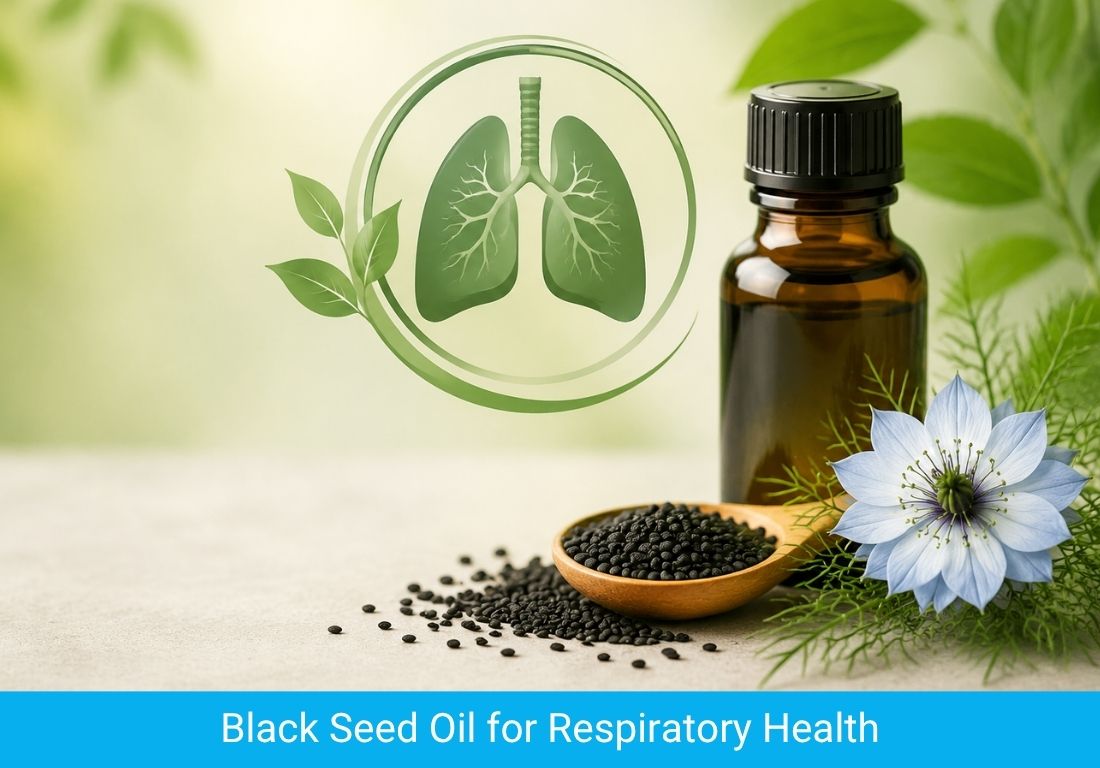
Multiple clinical studies have evaluated the effect of thymoquinone on bronchial smooth muscle and airways. Research published across medical journals has demonstrated improvements in asthma symptom scores, peak expiratory flow rate, and frequency of attacks when nigella sativa supplementation was compared to placebo. This is why respiratory health continues to be a primary positioning angle for black seed oil supplements in markets across the Middle East, South Asia, Europe, and North America.
Immune Support: A High-Demand Positioning Category
Nigella sativa benefits related to immune function are perhaps the most commercially significant for supplement brands today. Thymoquinone has demonstrated the ability to modulate cytokine production and support natural killer cell activity in preclinical studies. Post-pandemic, consumer awareness of immune-supporting supplements has increased substantially, and black seed oil sits in a strong position to benefit from this trend.
Anti-Inflammatory Properties of Kalonji Oil
Chronic inflammation sits at the root of a wide range of conditions that consumer health brands target. Kalonji oil addresses this through multiple mechanisms:
- Thymoquinone inhibits pro-inflammatory pathways including cyclooxygenase activity
- Antioxidant activity helps neutralise free radicals that drive oxidative stress
- Nigellone, another active compound, contributes additional anti-allergic and anti-histaminic effects
Skin and Hair Health Applications
Black seed oil benefits for skin and hair have driven strong demand in the cosmetics and personal care sector. Its combination of linoleic acid, thymoquinone, and antioxidants makes it suitable for anti-acne formulations, scalp treatments, hair growth serums, and facial oils. Cosmetic formulators sourcing nigella sativa seed oil in bulk typically look for a refined grade with lower free fatty acid content for better shelf stability in finished products.
Liver and Kidney Support
Animal and human studies have investigated the hepatoprotective effects of thymoquinone. Findings suggest that regular consumption of kalonji oil supports liver enzyme normalisation and offers some degree of protection against hepatotoxic agents. This positions black seed oil as a relevant ingredient in liver support supplements and detox formulations.
 Email Us!
 Industries Using Black Seed Oil in Bulk Today
Black seed oil is no longer a single-category ingredient. Bulk procurement of nigella sativa seed oil comes from a broad range of industries:
- Nutraceutical and dietary supplement manufacturers producing softgels, liquid drops, and capsules
- Cosmetic and personal care brands formulating serums, hair oils, creams, and cleansers
- Pharmaceutical companies using cold-pressed kalonji oil in topical and oral formulations
- Functional food producers incorporating black seed oil into fortified oils, dressings, and health bars
- Herbal and Ayurvedic product manufacturers supplying traditional medicine markets in Asia and the Middle East
- Private label supplement distributors serving the UK, US, EU, and GCC markets
Each of these buyer categories has specific quality requirements. A supplement manufacturer will require a different specification from a cosmetic formulator, and understanding these differences before placing a bulk order saves significant reformulation cost later.
Our Other Product
Guar Gum PowderHow to Evaluate Black Seed Oil Quality for Bulk Sourcing
Not all black seed oil in the market is equal. Buyers sourcing nigella sativa seed oil in bulk need to evaluate suppliers against a clear set of quality parameters.
Key Quality Parameters for Black Seed Oil
- Thymoquinone content: minimum 0.5 percent, preferably above 1 percent for therapeutic-grade applications
- Free Fatty Acid (FFA) value: lower FFA indicates fresher oil with better shelf stability
- Peroxide value: a measure of oxidation level, should be low to ensure product quality
- Moisture and volatile matter: should be minimal to prevent rancidity
- Extraction method: cold-pressed is preferred for nutraceutical and cosmetic applications as it preserves active compounds
- Colour and odour: characteristic dark amber colour and pungent aroma, with no off-notes
- Microbiological parameters: total plate count, absence of pathogens including Salmonella and E. coli
- Halal and Kosher certification: mandatory for certain markets
A credible supplier will provide a full Certificate of Analysis covering all the above parameters with every batch. Requesting a sample and independent third-party testing before committing to large volumes is standard practice.
Black Seed Oil Bulk Sourcing from India: Why It Makes Commercial Sense
India is among the leading origins for nigella sativa seed oil globally. The combination of established cultivation zones, traditional processing expertise, and modern quality infrastructure makes Indian suppliers competitive on both price and specification.
Key advantages of sourcing black seed oil in bulk from India include:
- Year-round availability from reliable seed stock grown in Rajasthan, Gujarat, Madhya Pradesh, and Uttar Pradesh
- Cold-pressing facilities with modern processing to preserve thymoquinone integrity
- Flexible packaging: available in drums, jerry cans, and IBC totes for different volume requirements
- Compliance with international standards including FSSAI, Halal, and Kosher
- Competitive pricing driven by proximity to source
- Export experience to the Middle East, Europe, Southeast Asia, and North America
About Abdullabhai Abdul Kader (Ahmedabad)
Abdullabhai Abdul Kader (Ahmedabad) is a well-established manufacturer and exporter of agro-based specialty ingredients based in Ahmedabad, Gujarat, India. With decades of industry experience, the company supplies high-quality natural ingredients to B2B buyers across more than 30 countries.
Abdullabhai Abdul Kader (Ahmedabad) supplies nigella sativa seed oil and kalonji oil to nutraceutical brands, cosmetic manufacturers, pharma companies, and food producers. The company maintains stringent quality standards at every stage from raw seed selection through to final packaging.
What sets Abdullabhai Abdul Kader (Ahmedabad) apart for bulk buyers:
- Consistent thymoquinone content verified through batch testing
- Available in cold-pressed and refined grades to match different application needs
- Full documentation including Certificate of Analysis, MSDS, and Halal certification
- Flexible MOQ and packaging configurations for first-time and repeat orders
- Established relationships with buyers in the Middle East, Europe, Southeast Asia, and North America
- Responsive technical support to assist with formulation questions and specification matching
Buyers looking to source black seed oil in bulk, evaluate a sample, or discuss custom specifications are encouraged to contact Abdullabhai Abdul Kader (Ahmedabad) directly.
Black Seed Oil Benefits Make It a Priority Ingredient for B2B Buyers in 2025
The evidence behind black seed oil benefits is well-established, and demand from supplement, cosmetic, pharma, and food brands continues to grow. Thymoquinone content, fatty acid profile, extraction method, and certification compliance are the parameters that separate commercially viable nigella sativa seed oil from commodity material.
For B2B buyers, the practical question is not whether to include kalonji oil in your product range but how to source it consistently at the right specification and price. India offers the combination of seed availability, processing capability, and export infrastructure that makes bulk procurement straightforward.
Abdullabhai Abdul Kader (Ahmedabad) is ready to support your sourcing requirements with samples, specifications, and competitive pricing. Reach out today to start a conversation about your bulk requirements for nigella sativa seed oil.

